Surgical Orthodontics at CG Orthodontics
Advanced Orthodontic Care for Complex Jaw and Bite Concerns
Some orthodontic concerns involve more than the position of the teeth. When the upper and lower jaws do not develop or align properly, braces or clear aligners alone may not be enough to create a healthy, functional bite.

- Individualized Care Planning around your diagnosis
- Coordinated Treatment Orthodontist & surgeon collaboration
- Yardley & Richboro Welcoming Bucks County patients
Understanding surgical orthodontics
Care for the teeth.
Planning for the jaws.
Surgical orthodontics, also known as orthognathic surgery or corrective jaw surgery, combines orthodontic treatment with jaw surgery to address certain skeletal and bite problems. Orthognathic surgery can reposition the upper jaw, lower jaw, or both when appropriate.
At CG Orthodontics, Dr. George and Dr. Cogan have experience treating complex orthodontic cases that require careful coordination between orthodontics and oral and maxillofacial surgery. Our role is to evaluate your teeth and bite, develop and manage the orthodontic portion of your treatment, and work collaboratively with your oral and maxillofacial surgeon throughout the process.
CG Orthodontics provides surgical orthodontic care for patients at our Yardley and Richboro offices, including patients from Newtown and surrounding Bucks County communities.
What is orthognathic jaw surgery?
When Orthodontics and Jaw Correction Work Together
Orthodontic treatment moves the teeth. Orthognathic surgery changes the position of the jaw bones.
When a bite problem is primarily caused by the position or relationship of the jaws rather than the teeth alone, orthodontic treatment may not be able to fully correct the underlying concern. In these cases, surgical orthodontics may be considered.
Treatment typically involves orthodontic care before surgery to position the teeth in preparation for the corrected jaw relationship. An oral and maxillofacial surgeon then performs the planned jaw surgery. Orthodontic treatment generally continues after surgery to refine the bite and move the teeth into their final positions.
This collaborative approach allows the orthodontist and surgeon to address both the alignment of the teeth and the underlying jaw relationship.
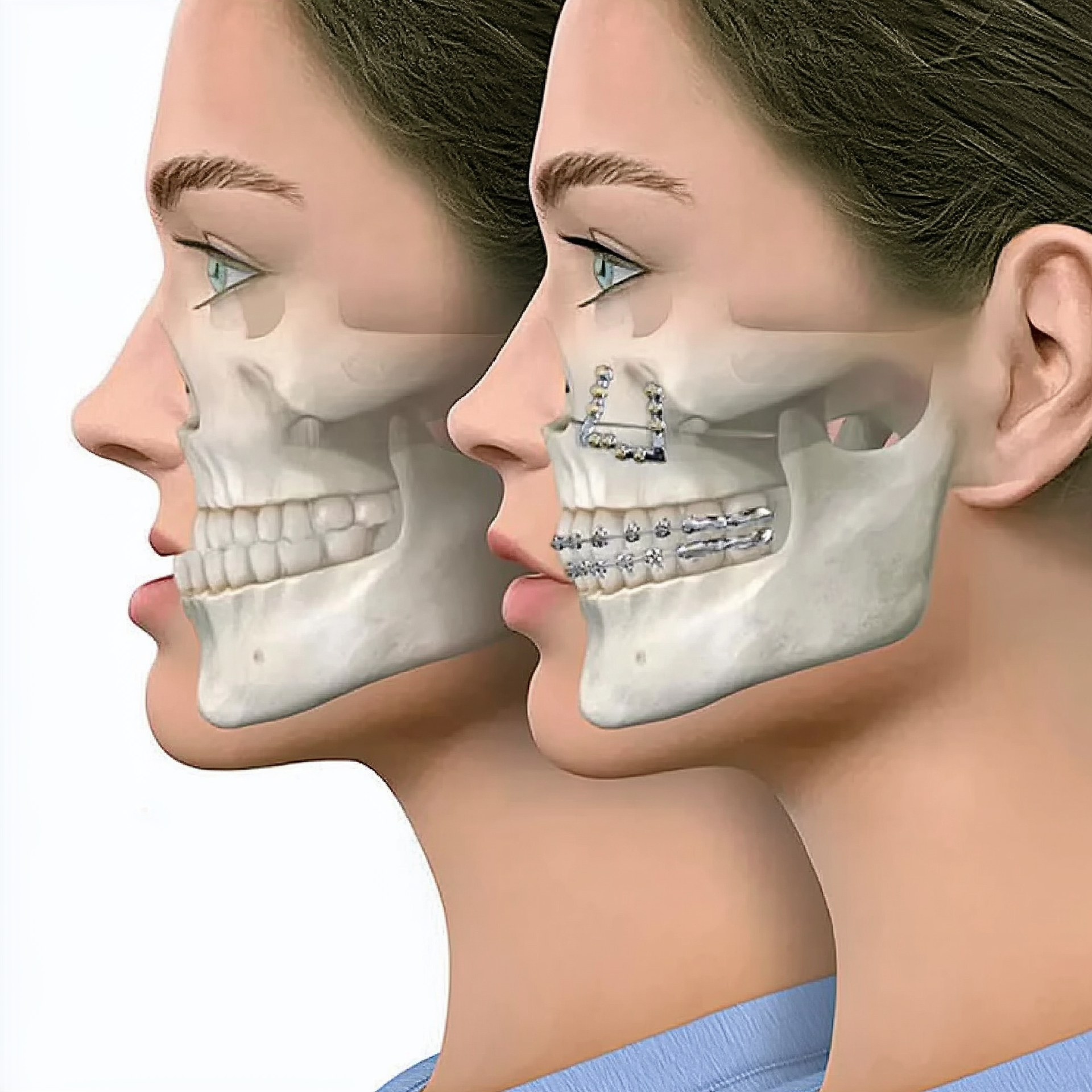
Educational before-and-after simulation, not an actual patient result. Individual outcomes vary.
When is it needed?
When Braces or Clear Aligners Alone May Not Be Enough
Many bite and alignment concerns can be successfully treated with braces or clear aligners. However, when a significant difference exists between the size, position, or relationship of the upper and lower jaws, orthodontic treatment alone may not be able to achieve the desired functional result.
An evaluation for orthognathic surgery may be considered for patients with concerns such as a significant underbite or overbite, open bite, facial or jaw asymmetry, a noticeably receding or protruding jaw, difficulty biting or chewing because of jaw alignment, or other skeletal jaw discrepancies. American Association of Oral and Maxillofacial Surgeons (AAOMS) also identifies concerns such as excessive tooth wear, difficulty swallowing, inability to comfortably bring the lips together, and certain breathing concerns among conditions that may warrant evaluation.
Having one of these concerns does not automatically mean you need jaw surgery. A comprehensive evaluation is needed to understand whether the problem is primarily related to the teeth, the jaws, or a combination of both.
Dr. George and Dr. Cogan can evaluate your orthodontic needs and discuss whether braces, clear aligners, surgical orthodontics, or another treatment approach should be considered.
Potential benefits
Improving More Than the Appearance of Your Smile
The primary goal of orthognathic surgery is to correct functional problems associated with jaw position and alignment. Depending on the patient's individual condition, treatment may improve the way the upper and lower teeth fit together and make functions such as biting, chewing, or speaking easier. Correcting jaw position can also improve facial balance and symmetry.
For appropriate patients, potential benefits may include:
-
Improved bite function:
Correcting the relationship between the upper and lower jaws can create a more functional bite.
-
Improved chewing and speaking:
Certain jaw discrepancies can interfere with everyday oral function, and correction may improve these concerns.
-
Better facial balance:
Repositioning the jaws can change their relationship to one another and improve overall facial harmony.
-
Improved tooth alignment:
Orthodontic treatment before and after surgery positions the teeth to work with the corrected jaw relationship.
-
Potential breathing benefits:
For certain patients and jaw discrepancies, repositioning the jaws may also improve airway function.
Every surgical orthodontic case is different. The specific goals and potential benefits should be determined through evaluation and treatment planning with your orthodontist and oral and maxillofacial surgeon.
From evaluation to retention
A Collaborative Treatment Process
Surgical orthodontics isn't a single procedure. It is typically a coordinated treatment process involving your orthodontist and an oral and maxillofacial surgeon.
-
1. Orthodontic Evaluation and Treatment Planning
Dr. George or Dr. Cogan evaluates your teeth, bite, and jaw relationships to determine whether there is a skeletal concern that may benefit from surgical evaluation.
If surgical orthodontics is being considered, CG Orthodontics works collaboratively with an oral and maxillofacial surgeon to develop the treatment plan.
-
2. Orthodontic Treatment Before Surgery
Braces or, in selected cases, another orthodontic approach may be used before surgery to move the teeth into positions that will allow them to fit together appropriately after the jaws are repositioned.
An important point for patients to understand is that the bite may temporarily appear less aligned during this stage because the teeth are being prepared for the new jaw position, not their current one.
-
3. Orthognathic Jaw Surgery
Once the teeth are appropriately positioned, the oral and maxillofacial surgeon performs the planned procedure to reposition the jaw or jaws.
The exact surgical approach depends on the patient's anatomy and treatment goals and is determined by the surgeon in coordination with the orthodontic treatment plan.
-
4. Orthodontics After Surgery
After the initial surgical healing period, orthodontic treatment continues as needed to refine tooth position and the bite.
-
5. Retention
Once active orthodontic treatment is complete, retainers help maintain the final tooth positions.
Thoughtful care for complex cases
Complex Treatment Requires Careful Planning
Complex orthodontic treatment requires more than simply straightening teeth. Dr. George and Dr. Cogan evaluate how the teeth, bite, jaws, and facial structures work together when developing a treatment plan.
For patients whose needs extend beyond what orthodontics alone can accomplish, CG Orthodontics coordinates care with an oral and maxillofacial surgeon to develop a comprehensive approach designed around the patient's individual diagnosis and treatment goals.
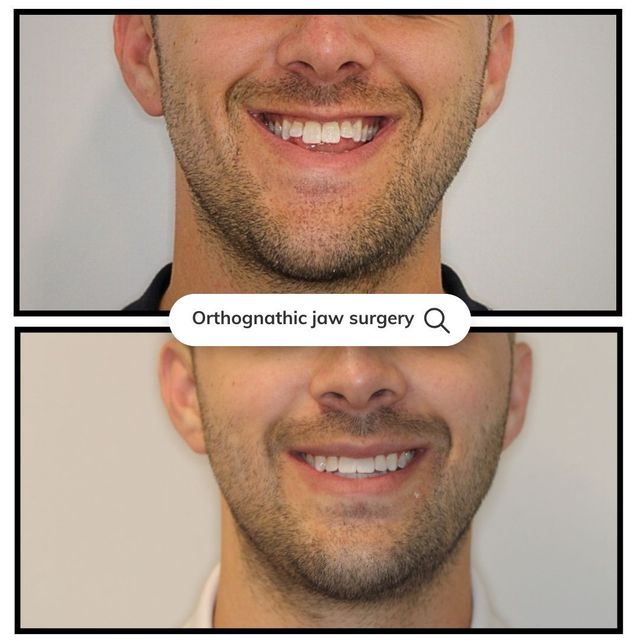
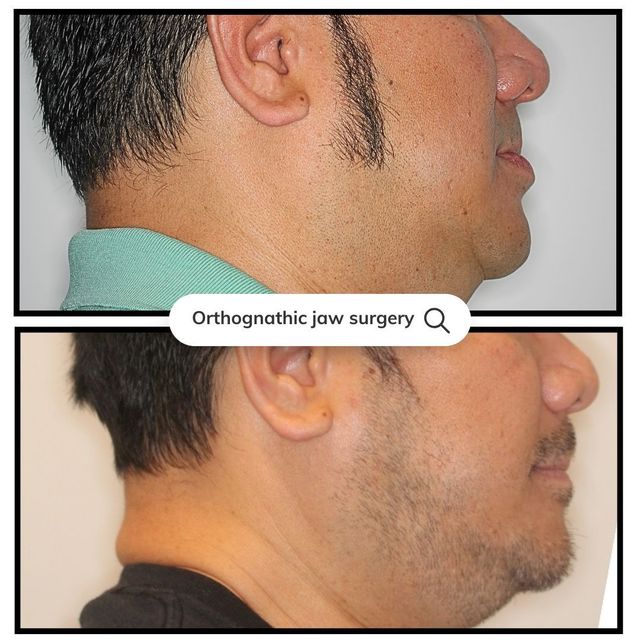
Real Surgical Orthodontic Results
Explore five patient before-and-after comparisons. Select any image to view it larger.
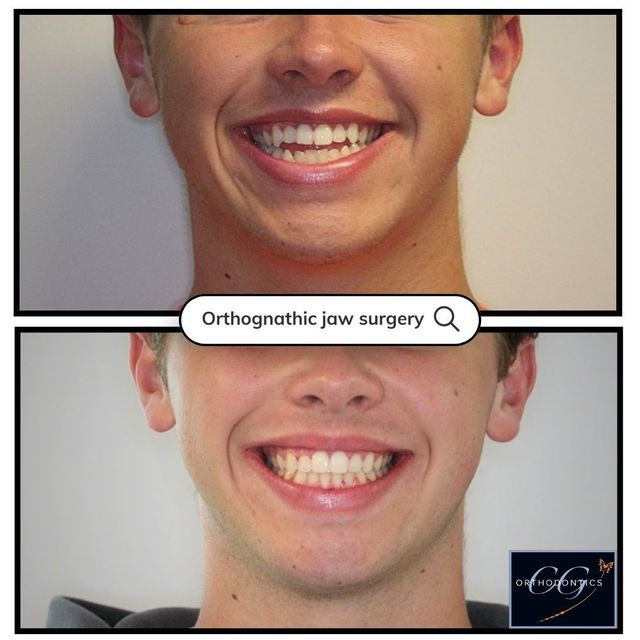
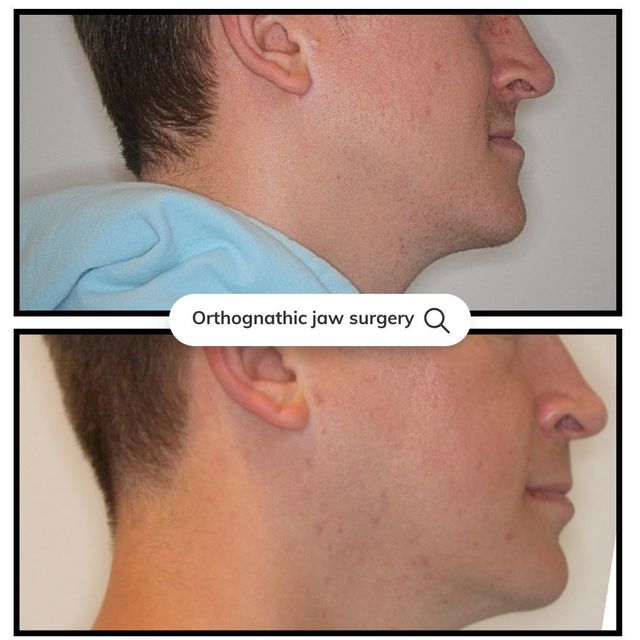
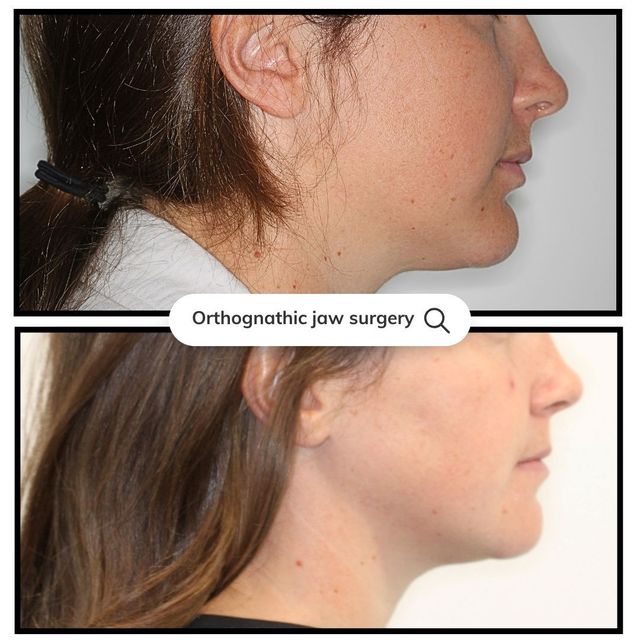
Surgical vs. traditional treatment
Does Everyone With a Bite Problem Need Jaw Surgery?
No.
Many bite concerns can be treated successfully with braces, clear aligners, or other orthodontic approaches without surgery.
Surgical orthodontics is generally considered when an underlying skeletal jaw discrepancy cannot be adequately corrected through tooth movement alone. The American Association of Orthodontists (AAO) specifically distinguishes these cases from malocclusions that can be managed orthodontically without changing the jaw position.
That is why diagnosis matters.
If you're concerned about your bite or jaw alignment, you do not need to determine whether you need surgery before scheduling a consultation. Dr. George or Dr. Cogan can evaluate your orthodontic needs, explain what they see, and discuss the appropriate next steps.
Answers for your next step
Surgical Orthodontics FAQs
Learn more about jaw surgery, orthodontic preparation, and coordinated care at CG Orthodontics.
Talk With Our TeamWhat is surgical orthodontics?
Surgical orthodontics combines orthodontic treatment with corrective jaw surgery to address certain problems involving the position or relationship of the jaws. It is also commonly called orthognathic surgery.
What is orthognathic jaw surgery?
Orthognathic surgery is corrective jaw surgery used to reposition the upper jaw, lower jaw, or both when jaw alignment is contributing to a significant skeletal or bite problem. The surgery itself is performed by an oral and maxillofacial surgeon.
How do I know if I need jaw surgery?
Jaw surgery may be considered when a significant jaw discrepancy cannot be adequately corrected with orthodontic tooth movement alone. Signs that may warrant evaluation include a severe overbite or underbite, open bite, jaw asymmetry, difficulty biting or chewing, or a significantly protruding or receding jaw. An orthodontic and surgical evaluation is necessary to determine whether surgery is appropriate.
Can braces fix my bite without jaw surgery?
Many bite problems can be treated orthodontically without surgery. Whether braces or clear aligners alone are sufficient depends on whether the problem is primarily caused by tooth position, jaw position, or both.
Do I need braces before orthognathic surgery?
Orthodontic treatment is commonly performed before jaw surgery to position the teeth for the planned jaw correction. Orthodontic treatment generally continues after surgery to refine the final bite.
Who performs orthognathic jaw surgery?
An oral and maxillofacial surgeon performs orthognathic surgery. The orthodontist manages the orthodontic portion of treatment and works collaboratively with the surgeon during treatment planning and care.
Can Invisalign be used with surgical orthodontics?
The orthodontic approach depends on the individual case and surgical treatment plan. Some surgical cases may be managed with clear aligners in appropriate circumstances, while others may require braces. Dr. George or Dr. Cogan can explain the orthodontic options available based on your diagnosis and treatment needs.
What are the benefits of corrective jaw surgery?
Depending on the condition being treated, orthognathic surgery may improve bite function, chewing, speaking, jaw alignment, and facial balance. Certain procedures may also provide airway or breathing benefits for appropriate patients.
Is orthognathic surgery only for adults?
Jaw surgery is generally performed after jaw growth is complete. According to the AAO, this is typically in the late teen to early adult years, although the appropriate timing depends on the individual patient.
How long does surgical orthodontic treatment take?
The timeline varies substantially based on the patient's diagnosis, orthodontic needs, surgery, and recovery. Surgical orthodontics generally includes orthodontic treatment before surgery, the surgical procedure and recovery period, and additional orthodontic treatment afterward. Your orthodontist and surgeon can provide a more individualized timeline after completing their evaluations.
Does insurance cover orthognathic surgery?
Coverage varies by insurance plan and the medical necessity of the procedure. The AAO notes that orthodontic treatment and orthognathic surgery may fall under different benefits, with surgical coverage potentially handled through medical rather than dental insurance. Patients should verify their individual benefits directly with their insurance providers.
Where can I find surgical orthodontic care near Newtown, PA?
CG Orthodontics provides orthodontic care for complex and surgical cases at our Yardley and Richboro offices and welcomes patients from Newtown and surrounding Bucks County communities. When orthognathic surgery is appropriate, CG coordinates the orthodontic component of treatment with an oral and maxillofacial surgeon.
Explore Orthodontic Care Near NewtownYour next step starts with a conversation
Complex Case? Start With an Orthodontic Evaluation.
Being told that you may need jaw surgery can bring up a lot of questions. You don't need to have all of the answers before your first visit.
At CG Orthodontics, Dr. George and Dr. Cogan can evaluate your teeth, bite, and jaw relationships, explain your orthodontic options, and help determine whether surgical orthodontics should be considered.
For patients who would benefit from orthognathic surgery, our team works collaboratively with an oral and maxillofacial surgeon to coordinate the orthodontic care before and after surgery. CG Orthodontics provides complex orthodontic care at our Yardley and Richboro offices, welcoming patients from Newtown and throughout surrounding Bucks County communities.